

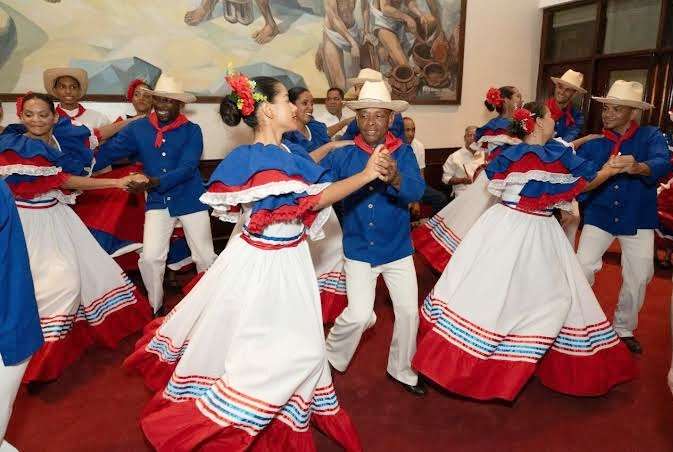
Whenever we've been to the Dominican Republic, we ask its inhabitants if they know of any sad merengue. No one in Quisqueya knows of a sad merengue because it's the rhythm that determines and sets the dominant tone in the danceable musical discourse of their merengue.
If I remember correctly, it was Darío Tejeda who told us that “Misia Juanica” was a sad merengue… but people danced to it. “My child is dying/ and I have no money for medicine.” Just recently, Darío Tejeda himself published his book of more than 400 pages titled “The Joyful Cruelty: Music and Power. A Sonic History of the Trujillo Dictatorship.” Tejeda investigated in depth the role of music (especially popular music) as an instrument of power and even political control, applying his research to a period in his country's history, focusing primarily on Dominican merengue.
Today we watch in astonishment as the government of this country expels from its territory the diplomatic personnel of Cuba, from a nation characterized by its endurance, its solidarity and its closeness with what was once Hispaniola, now divided into two countries where the most dignified has been the most despised.
In the plans of the orange-clad president, we have never seen concepts like art, culture, brotherhood, or music included. They are road marker-like plans, immovable, dry, devoid of humanity, but the Caribbean is one and will remain one. It has shared sorrows, resilience, joys, and a common heartbeat.
For names and careers as respectable as those of José Antonio Rodríguez, Víctor Víctor, Sergio Vargas, Sonia Silvestre, Luis Días, Johnny Ventura, Wilfrido Vargas and his brother Juan, Dioni Fernández, Crispín Fernández, Mariadalia Hernández, Rubby Pérez, at this moment the Dominican Republic has a discordant government that has forgotten Caamaño and Juan Bosch.
Sad meringue.
@lildelvalle


