

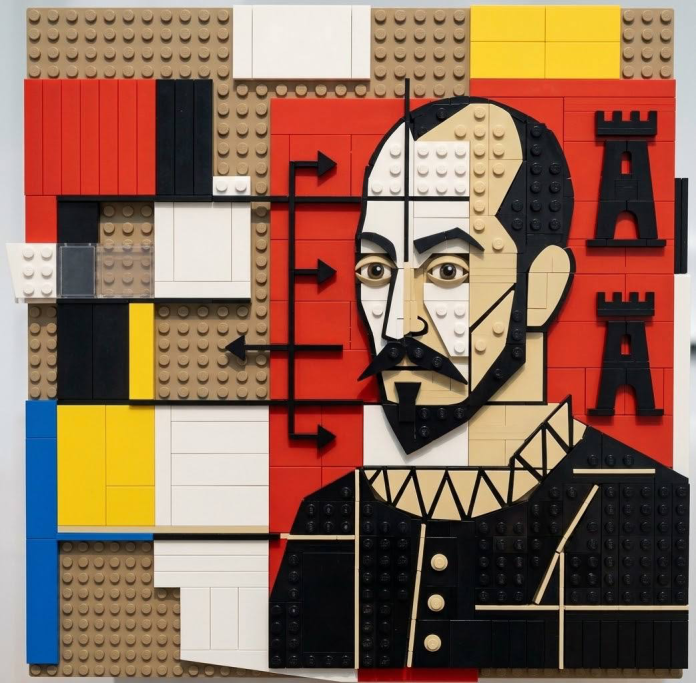
We should be equally wary of self-proclaimed scholars and boastful ignoramuses. We don't need to be overly concerned with the former, as they have disappointed us enough throughout history, and, to make matters worse, their inconsistency betrays them far too quickly in this digital age. On the other hand, we are never quite prepared to deal with this latter, stranger breed. In fact, every time someone declares their ignorance, every time they truly say they "know nothing," the certainties of their time tremble, and with that single confession, the possibility of something new bursts forth. The example of Socrates would suffice: he not only affirmed his own ignorance but also demonstrated everyone's by subjecting every idea, whether his own or inherited from his time, to scrutiny. And he didn't do so to construct his own theories: let's remember that his dialogues led us down a dead end. We will write about the paradoxes and the fertility inherent in this doctrinal "lack" at another time. Let's just say that Western philosophy was founded on that labyrinth. Let's look today at the case of Montaigne: from a very similar confession was born a genre upon which all modern intellectual activity depends to house the polyphony of thought: the essay.
In 1576, Michel de Montaigne—guest and master of the mythical Ivory Tower—wore a medal with a motto engraved in Greek and French that translated as “What do I know?”: the well-known Pyrrhonian formula of skepticism. Neither rhetoric nor false modesty: that phrase, with its endearing irony, constituted for him the most upright stance for confronting the dogmas of his time. With it, he composed a work that had the courage to say everything that could be said about the world: education, grief, friendship, war, conquest, illness, old age, youth, desire, love, and its decline.
He was devoted to doubt almost as much as to poetry. From the latter, he probably drew all the solace and intuition necessary to sustain the vigilance of thought and the endless examination of reality. Montaigne knew this: the poem is affirmation and delight, and only in it, and through it, do things most distant in time remain alive and retain the gift of infinite novelty. For Montaigne, poetry was the past and the future of the essential. That is why he recited poems while flaunting his poor memory. He used this incompetence as a pretext to invite us to distrust his certainties. He declared himself incapable of pronouncements on lasting truths. He said, not without humor, that he had forgotten his studies and knowledge. "If I ever had any instruction, I no longer remember it." Hence, "Today I say this, tomorrow I don't know," his own way of qualifying his musings and of embracing forgetting as a method of unlearning and intellectual liberation.
His aversion to rigid erudition was not fruitless; from it sprang a body of work capable of harboring the most brilliant and courageous ideas of the late Renaissance, for they had to confront the violence of Protestantism, the no less bloody European conquest of what we now call America, and finally, the dawn of scientism. All this with dazzling honesty, because far from pontificating on these and other matters of everyday life, Montaigne allowed himself a personal tone, theoretical contradiction, and public rebuke. After all, he himself was the subject of his book, as he often confessed in the form of a warning. With good reason, a spirit like Virginia Woolf would take The essays as an open existential model. For her, Montaigne's pages were mirrors in which generations of writers could see themselves reflected without deciphering or exhausting their transparency. She notes it in her diary: "what matters is life itself," "that's why I keep repeating my own version of Montaigne to myself."
Let's be clear about one thing: Montaigne's skepticism—not to mention that of the original Socrates—was not related to or influenced by any form of misology: that symptom of weariness and horror of strong thought, which has plagued human virtues since their inception. In both cases, doubt was the highest expression of the responsibility of thinking and the most demanding of all possible paths to finding meaning in life.
Montaigne, as Wolf interpreted it, is a contemporary. His feat is echoed in very different minds of our time. His presence ranges from the most rigorous and orderly minds, like Descartes', to the tragic and abysmal intuitions of a Pascal. He left his mark on serene moralists like Emerson, and on the most devastating, like Nietzsche. Absolutely everyone agrees that reading Montaigne is to encounter one's own thoughts. If we analyze it fairly, everyone who has written about themselves—that is, about their being—whether or not this was their intention, is doing so for all of humanity. It should not surprise us, then, that four centuries later, from his solitary and secluded Ivory Tower, Montaigne continues to compose an artistic, social, political, and, in short, human portrait of a time that, against all logic, is also our own.


How well the premise reflects our times. And what a fitting summary. Brilliant. Thank you.