

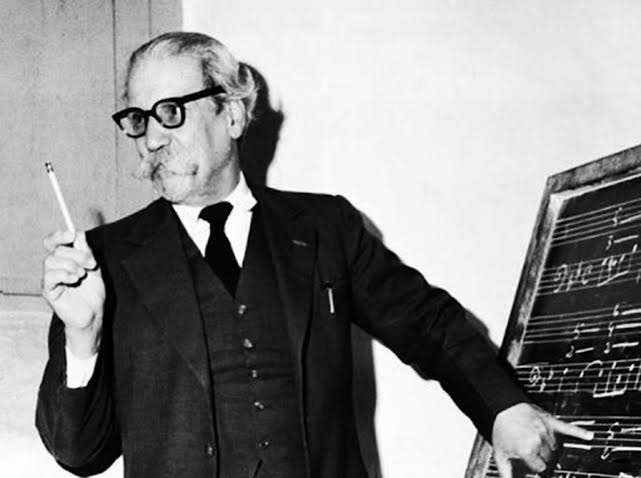
When Maestro Vicente Emilio Sojo created the Orfeón Lamas and his disciples undertook the task of taking pieces from the traditional Venezuelan repertoire and making choral arrangements with a special use of musical counterpoint techniques, he not only initiated a tradition of choral singing in the country, which was, in turn, reproduced as an educational policy in schools and high schools, but also laid the foundations for the emergence of vocal ensembles whose sounds are already part of the tradition, understood as such, that which constitutes an essential element of our identity.
The first of these ensembles was the Contrapunto Quintet, initially composed of Aida Navarro, Marina Auristela Guánchez, Morella Muñoz, Otilia Rodríguez, Jesús Sevillano, Domingo Mendoza, and its director and arranger, Rafael “Fucho” Suárez. This group caused a sensation in the 1960s until the untimely death of its director in 1971.
In June of that same year, musicians Hernán Gamboa—who would later be replaced by Miguel Ángel Bosch—Iván Pérez Rossi, César Pérez Rossi, and Mauricio Castro created Serenata Guayanesa, following the Contrapunto tradition but moving away from its lyrical texture and academic rigor, gaining in freshness and spontaneity. That year they recorded an album that received a somewhat timid reception, showcasing the work of one of the leading figures in traditional Angostura music, Alejandro Vargas, whose song "Casta Paloma" had already been popularized by Quinteto Contrapunto on their Christmas carol album.
However, it was with their second album, released in 1973, that they introduced many Venezuelans to a genre that was previously little known, achieving enormous popularity with the "Calypso of El Callao." Thanks to this success, songs from their first album, such as "El sapo," were re-released. Let's continue.


