

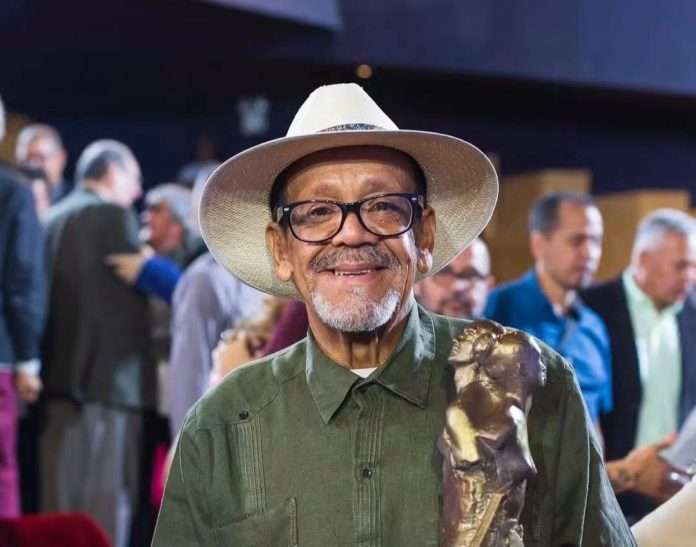
There's a distant connection between the Querales family and mine. One of the Capriles sisters is the sister-in-law of my father's third wife. Sounds complicated? Yes. And funny too, and therefore endearingly tender. Because when the Querales burst onto the artistic scene in 1976 with that prodigious project called Un solo Pueblo (One People), they touched my soul, amplifying their Venezuelan identity, while I was completely unaware of all those family intricacies that many of us only learned about thanks to the album that Rafael Salazar released in 1979, titled "Teo Capriles Sings to Caracas: Mischievous and Festive Songs of 19th-Century Venezuela," in which his Querales children participated in a magnificent family collaboration with the piano teacher Diana Franklin Capriles.
I was always fascinated by the way the genetic distribution of old Teo manifested itself between Capriles, who inherited and exercised his sporting qualities, and Querales, who assumed his musical gifts, and although no one can plan this type of matter, it seems like magical realism, like a premonition, that they decided to name their first son Querales Florentino, as a tribute to the fact that Teo was the first Florentino in Antonio Estévez's Cantata Criolla, which premiered in 1954 with Antonio Lauro in the role of The Devil.
Another member of the Querales family, Jesús, who, due to the tangled family ties that bind us, calls me "almost nephew," maintains the leadership of Un Solo Pueblo (One People), as well as a solid understanding of Venezuela's spiritual landscape and its key figures. Jesús is a tireless researcher, possessing an enormous photographic and audiovisual record of the diverse expressions of rural Venezuela.
The other is Ismael, who decided to explore the intangible on September 20th. Let's continue.




